Websites for medical specialists
A patient researching a specialist is making one of the most careful decisions they'll make — and they're comparing you against every other practice in the referral letter. A generic clinic template undersells years of training in seconds. I build hand-coded sites for specialists and clinics that match the standard of the practice itself: premium, fast, and built around the consultation enquiry.
What a specialist website needs to do
Read as premium immediately
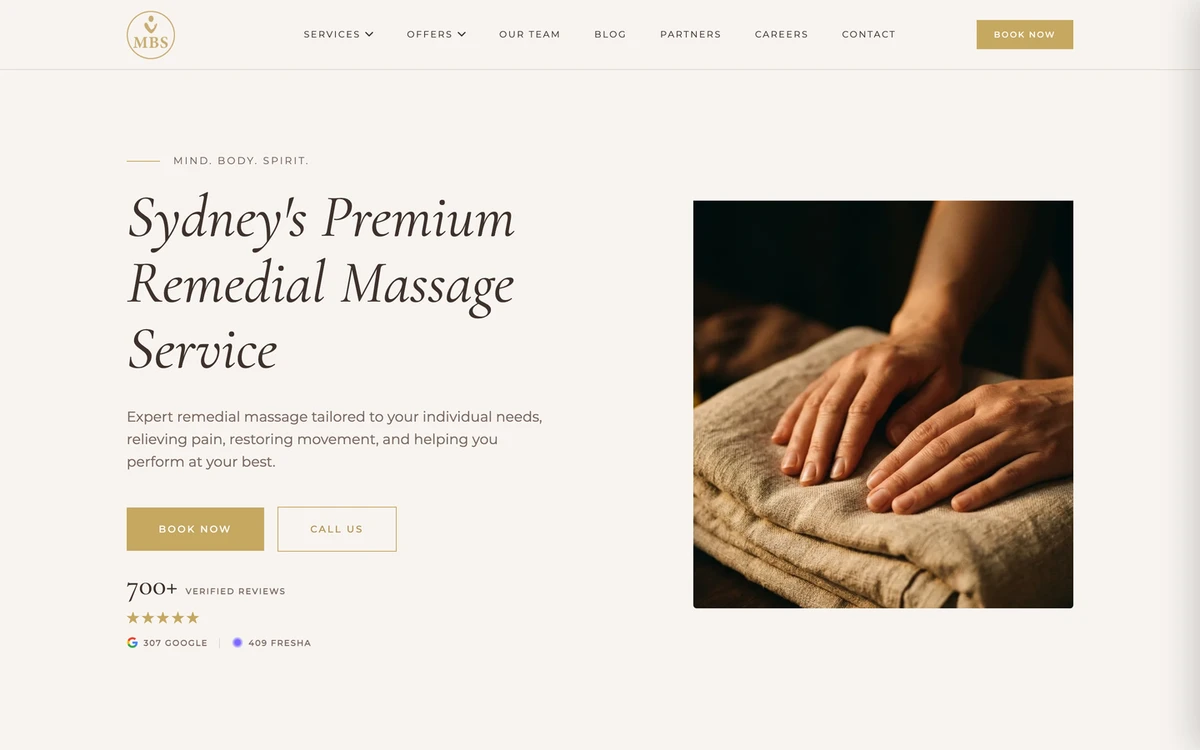
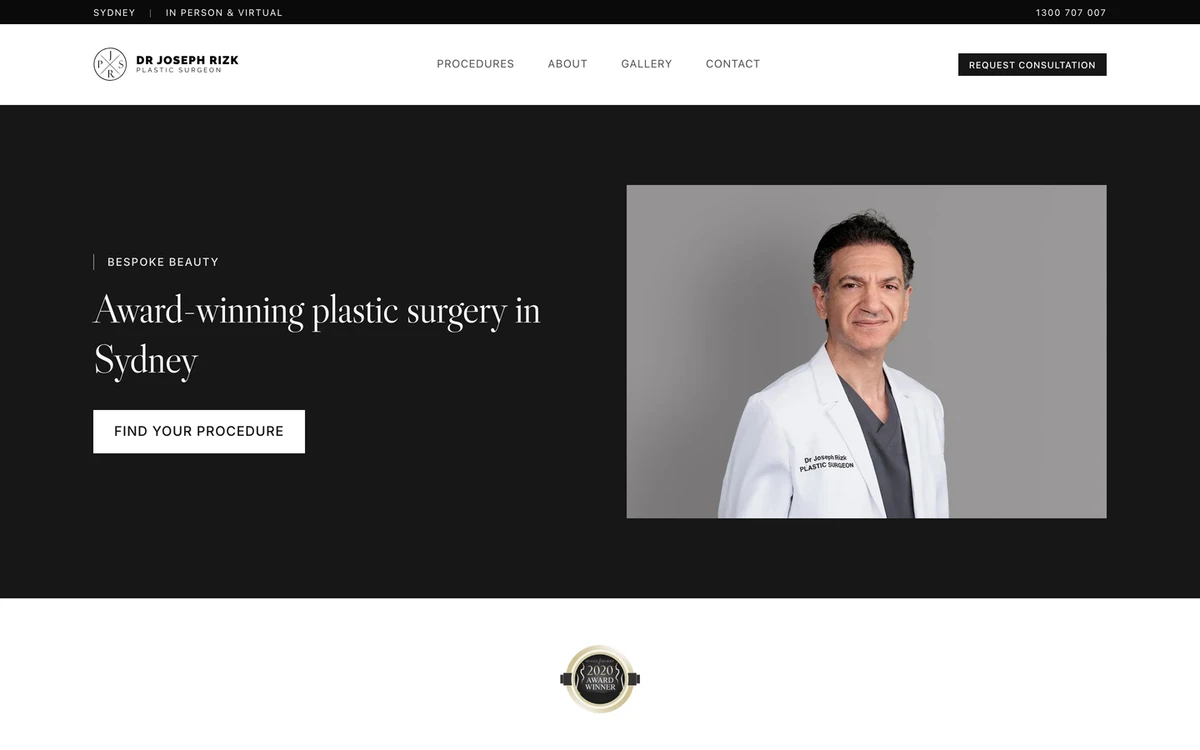
Patients equate the standard of the website with the standard of the practice — fairly or not. A specialist site needs restrained typography, real photography, and an editorial layout that signals the same care the practice applies clinically. Template sites structurally can't do this.
Convert research into consultations
Specialist patients research for weeks before contacting anyone. The site's job is to answer the questions they're actually weighing — procedure detail, recovery, credentials, what a consultation involves — and keep the enquiry one click away at the moment they're ready.
Hold up to referral scrutiny
Many specialist patients arrive with a referral and a shortlist. GPs, too, check the site before referring. Credentials, hospital affiliations, and procedure scope need to be findable in seconds, not buried in a PDF.
Stay compliant
Medical advertising in Australia is regulated — AHPRA guidelines constrain testimonials, before-and-after imagery, and claims. The site needs to be persuasive within those rules, which takes deliberate copy and structure rather than a marketing template's defaults.
Why hand-coded, not a clinic template
Most medical sites are built on the same clinic templates with the colours changed — which is why a patient comparing three specialists often can't tell the sites apart. In a field where differentiation is everything, that's a real cost.
A hand-coded site is designed around your practice specifically: your procedures, your photography, your tone. It loads fast on the mobile devices most patients research from, ranks well for procedure and specialty searches, and carries none of the plugin risk a WordPress clinic site accumulates.
It also keeps you in control of compliance — every claim, image, and testimonial on the site is deliberate, not inherited from a template built for a different regulatory environment.
Specialties I build for
Common questions
Straight answers before you ask for a quote.
How much does a medical website cost?
Specialist sites typically come in between $4,000 and $7,000 fixed, depending on the number of procedure pages and photography needs. That's roughly half a typical medical marketing agency's quote for the same scope, with a fixed price before I start.
Do you work within AHPRA advertising guidelines?
Yes. Testimonial handling, before-and-after imagery, and claim wording are all built to comply with AHPRA's advertising requirements for regulated health services — so the site sells the practice without creating regulatory exposure.
Can you build individual procedure pages?
Yes, and I recommend it — procedure pages are how patients search ("rhinoplasty Sydney", "knee reconstruction surgeon"). Each gets its own structured page with the clinical detail patients research and a clear consultation pathway.
Can patients book consultations through the site?
Yes — either through your existing practice software (HotDoc, HealthEngine, Zedmed, Best Practice integrations) or a structured enquiry form that gives your rooms everything needed to triage the enquiry.
How long does a specialist site take?
Most complete in 4–6 weeks. The main variables are photography and procedure copy — I'll give you an exact timeline with the quote, and your existing site stays live until the new one is approved.